Filipino American History Month in San Diego
Filipino American History Month in San Diego
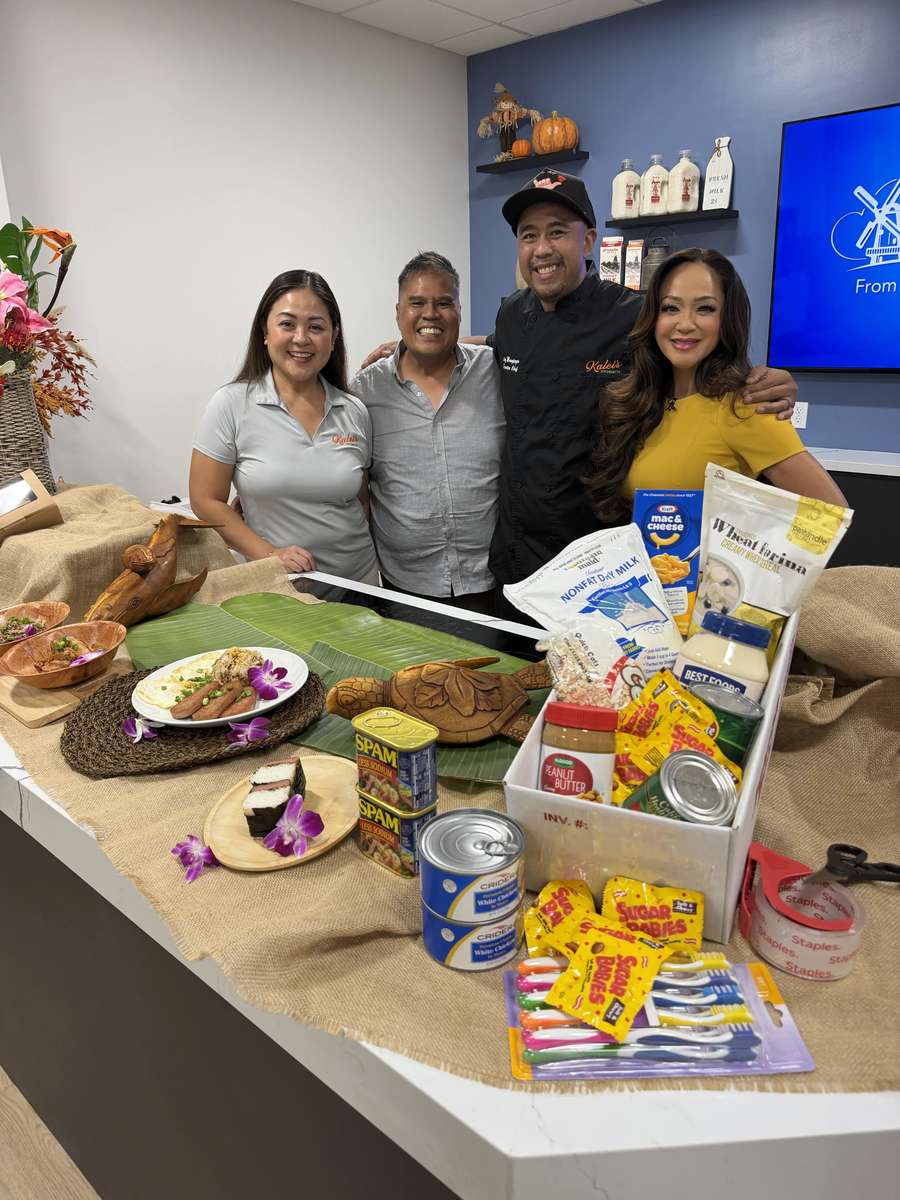 Food is more than a meal. It is a way families stay connected across generations, share their history, and show love even when they live thousands of miles apart.
For Filipino American History Month in October 2026, Kalei's Kitchenette visited the Fox 5 San Diego studio to share the stories behind some of our favorite foods. From balikbayan boxes filled with Spam to Hawaiian comfort food like kalua pork and Spam musubi, the conversation explored how food connects Filipino and Hawaiian cultures.
The host captured the heart of the story in the first minute: food is the Filipino love language. Watch the Fox 5 San Diego segment here.
What Is Filipino American History Month?
Filipino American History Month is observed every October to recognize the history, experiences, and contributions of Filipino Americans. The Filipino American National Historical Society proposed the month in 1991, with the first annual observance taking place in 1992. Congress officially recognized it in 2009.
October was chosen in part to recognize October 18, 1587, the date of the first recorded presence of Filipinos in the continental United States, at what is now Morro Bay, California.
The distinction between history and heritage matters. Heritage often highlights cultural traditions, while history also recognizes the events, experiences, and contributions that have shaped Filipino American communities.
- October 18, 1587: First recorded presence of Filipinos in the continental United States. Learn more from the San Diego Public Library.
- 1992: The first annual observance begins.
- 2009: Congress officially recognizes the month.
- October 25: Larry Itliong Day recognizes the Filipino American labor leader and organizer.
This history also connects to Hawaii. Filipino laborers known as the Sakada helped shape the islands' agricultural communities, and Filipino culture remains an important part of Hawaii's food traditions. Explore the Filipino influence on Hawaii's food culture.
What Is a Balikbayan Box?
A balikbayan box is a package of goods, food, clothing, and other gifts that Filipinos living abroad send to family and friends in the Philippines. The word balikbayan refers to returning to one's homeland, and the boxes have become a meaningful tradition for families separated by distance.
For Khara Mangiduyos, co-founder of Kalei's Kitchenette, the memory is personal. She grew up in the Philippines while her mom lived and worked in San Diego. When a balikbayan box arrived at the door, it was an exciting moment and a tangible reminder that her mom was thinking of the family.
One item was always part of the box: Spam
When Khara was growing up, Spam had to be imported, making a can in the box feel like a special treat. The family would enjoy it together with eggs and rice. It was a simple meal, but it carried a bigger meaning: love sent from far away, made real at the dinner table.
Sometimes, a familiar food says what words cannot. For many Filipino families, a balikbayan box is a reminder that distance does not have to mean disconnection.
Why Is Spam Popular in Hawaii and the Philippines?
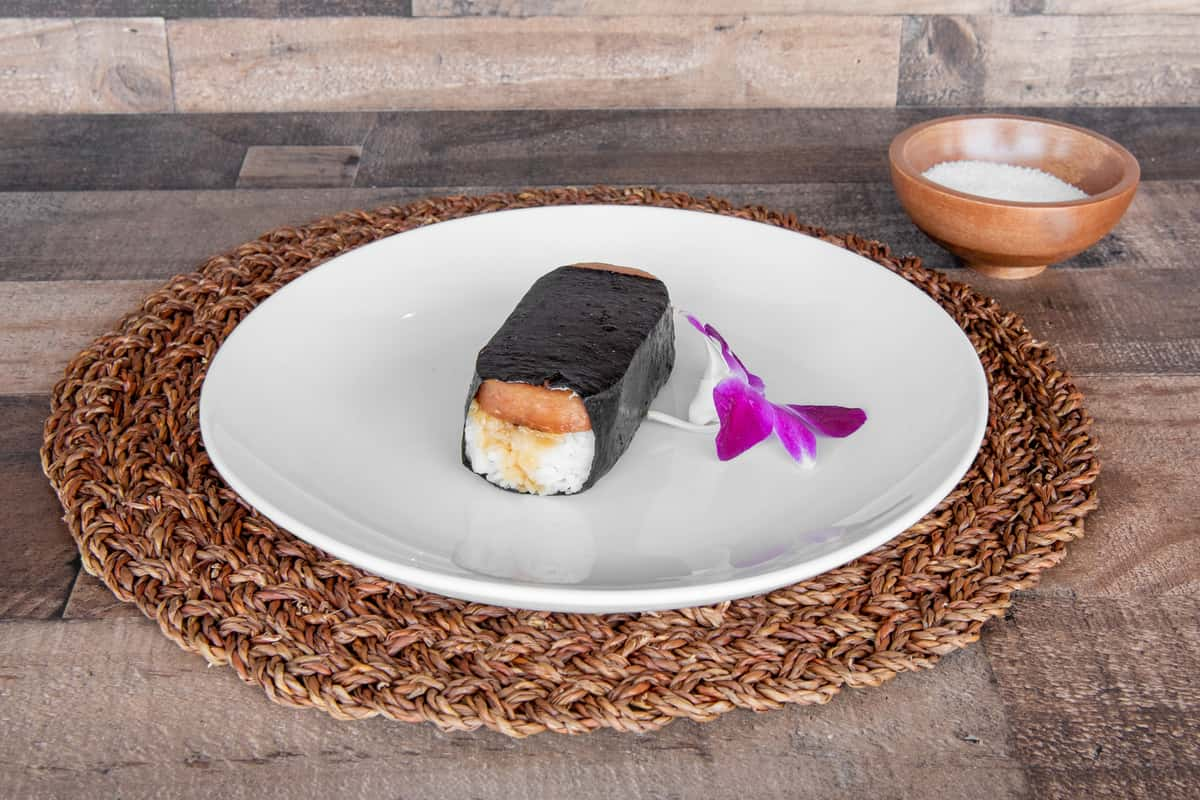
Spam has a long history in Hawaii, where it became especially popular during World War II because it was convenient, shelf-stable, and easy to prepare. Over time, it became part of everyday meals and local food culture.
In the Philippines, Spam also became a treasured pantry item, particularly for families receiving balikbayan boxes from relatives overseas. What was once a special imported product became associated with family meals, celebrations, and the excitement of receiving something from home.
Chef Andy Mangiduyos, co-founder of Kalei's Kitchenette, shared on Fox 5 that growing up in Hawaii meant eating garlic fried rice with Spam and a fried egg for breakfast, lunch, or dinner. It was familiar, satisfying food that fit into everyday family life.
That history helps explain why Spam musubi is such a natural fit on our menu. Made with Spam, rice, nori, and furikake, it brings together familiar flavors in a convenient, island-inspired favorite. It is also Kalei's Kitchenette's best-selling item.
Want to try it for yourself? Browse our Hawaiian menu or place a pickup order online.
What Is Spamsilog?
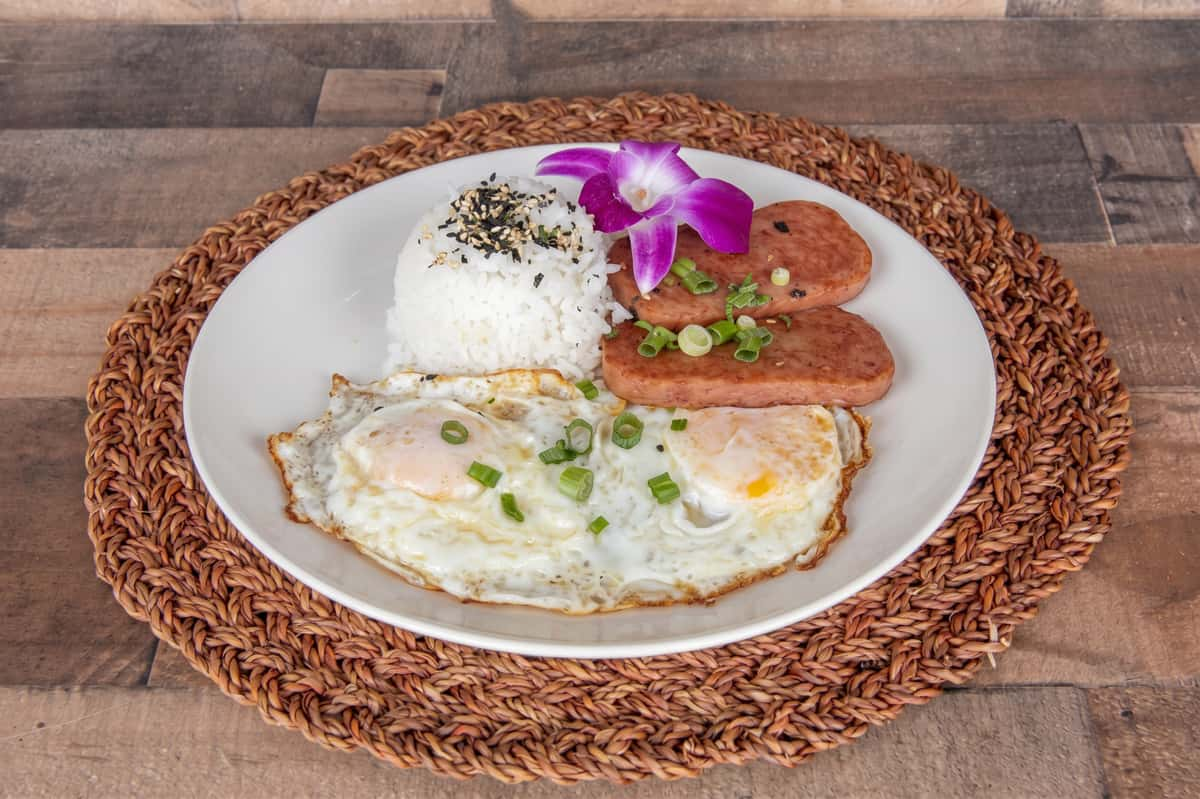
Spamsilog is a Filipino breakfast plate made with Spam, sinangag (garlic fried rice), and itlog (egg). The name combines the words for Spam, fried rice, and egg into one familiar meal.
It is a great example of how everyday ingredients can carry cultural meaning. The plate is simple, filling, and comforting, whether it is part of a family breakfast or a meal enjoyed at any time of day.
For Filipino American History Month, Kalei's Kitchenette served this combination as our Spam and Egg Plate, celebrating the flavors and memories that connect Filipino and Hawaiian food traditions.
What Cultures Shape Hawaiian Fusion Food?
Hawaiian food reflects generations of cultural exchange. Japanese, Chinese, Filipino, Polynesian, and other communities have all contributed to the islands' evolving food traditions. Those influences show up in ingredients, cooking techniques, and the meals families share.
During the Fox 5 segment, Khara discussed the Japanese, Chinese, and Polynesian influences found across our menu. From beef teriyaki to pork lumpia, our dishes reflect the variety of flavors that make Hawaiian fusion food so distinctive.
Chef Andy grew up in a family that loved to cook. At large family barbecues, he helped in the kitchen and learned how food brought people together. As he developed his own cooking style, he began adding personal touches to the dishes he grew up enjoying.
On air, Chef Andy shared two examples: kalua pork, prepared with Hawaiian salt, and huli huli chicken, his take on grilled chicken. Alongside Spam musubi, these dishes represent the comfort, flavor, and family traditions that inspire our kitchen.
Hawaiian Catering in San Diego for Cultural Celebrations
Food plays an important role in weddings, family reunions, birthdays, corporate gatherings, and cultural celebrations. The dishes on the table can honor family traditions, introduce guests to new flavors, and create shared memories across generations.
During the Fox 5 segment, the host also mentioned that Kalei's Kitchenette catered their wedding. We are proud to bring our Hawaiian fusion cooking to celebrations throughout Rancho Peñasquitos, Poway, Rancho Bernardo, Mira Mesa, La Jolla, Sorrento Valley, and 4S Ranch.
For larger Filipino celebrations, our 65-pound roasted lechon can serve as a memorable centerpiece. It is also one of Chef Andy's personal favorites. Read more about our kitchen and catering story in Cambro's Business of the Week feature on Kalei's Kitchenette.
Every social event begins with a discovery call so we can understand your celebration, venue, guest count, and service needs before preparing a proposal. Our menus are customizable, helping you choose food that fits the occasion rather than forcing your event into a preset package.
If you are planning a wedding that celebrates Filipino, Hawaiian, or blended family traditions, read our guide on honoring cultural and dietary preferences at a San Diego wedding.
Ready to plan your celebration? Explore Hawaiian catering in San Diego and tell us about your event. We book catering events Tuesday through Saturday.
Visit Kalei's Kitchenette in Rancho Peñasquitos
Whether you are craving Spam musubi, kalua pork, huli huli chicken, beef teriyaki, or pork lumpia, we would love to share our food with you.
Kalei's Kitchenette at a glance
- What we are: Family-owned Hawaiian fusion eatery and catering business since 2018.
- Owners: Khara and Chef Andy Mangiduyos.
- Address: 9926-F Carmel Mountain Road, San Diego, CA 92129, in Rancho Peñasquitos.
- Phone: (619) 738-4731
- Hours: Tuesday through Saturday, 11 AM to 7 PM. Closed Sunday and Monday.
Frequently Asked Questions
When is Filipino American History Month, and why is it celebrated in October?
• Filipino American History Month is observed every October. The month recognizes Filipino American history and contributions, including the first recorded presence of Filipinos in the continental United States on October 18, 1587, at Morro Bay, California. The Filipino American National Historical Society proposed the observance in 1991, the first annual observance took place in 1992, and Congress officially recognized the month in 2009.
Where can I try Spam musubi and Hawaiian food in Rancho Peñasquitos?
• Visit Kalei's Kitchenette at 9926-F Carmel Mountain Road, San Diego, CA 92129. We are open Tuesday through Saturday, 11 AM to 7 PM. Spam musubi is our best seller, and our menu also includes kalua pork, huli huli chicken, beef teriyaki, and pork lumpia. Browse our menu or order for pickup online.
Does Kalei's Kitchenette offer catering for Filipino and Hawaiian celebrations?
• Yes. We cater weddings, corporate events, family reunions, and social celebrations across North County San Diego and surrounding areas. Our menus are customizable, and every social event starts with a discovery call so we can discuss your venue, guest count, food preferences, and service requirements. Tell us about your event and request a custom catering quote.
Celebrate Your Story Through Food
From family gatherings to weddings and cultural celebrations, let Kalei's Kitchenette help you create a menu that brings people together. Tell us about your event and we will build a custom catering quote.
Plan Your Event